

AI is now moving beyond chatbots that simply answer questions. AI agents can reason through tasks, use tools, retrieve information, make decisions and take actions with limited human intervention. That has made agentic AI one of the most useful areas to learn in 2026. But, the problem is that many AI-agent courses advertised as “free” either require payment for the certificate, have outdated content, or teach only basic AI concepts.
Important: Some courses below provide a traditional certificate, while others provide a verified digital badge or skills credential. The distinction is explained for each course.
Quick Answer: Which Free AI Agent Courses are Best?
- If you want one course to start with, the Hugging Face AI Agents Course is the strongest overall choice because it combines agent fundamentals, hands-on development, multiple agent frameworks and a free certification pathway.
- For a shorter beginner course, Simplilearn’s AI Agents for Beginners is easier to complete.
- For practical development, Google’s 5-Day AI Agents Intensive on Kaggle is particularly useful because it covers tools, orchestration, memory, evaluation and production-oriented agent development.
1. Hugging Face AI Agents Course — Best Overall in Free AI Agent Courses
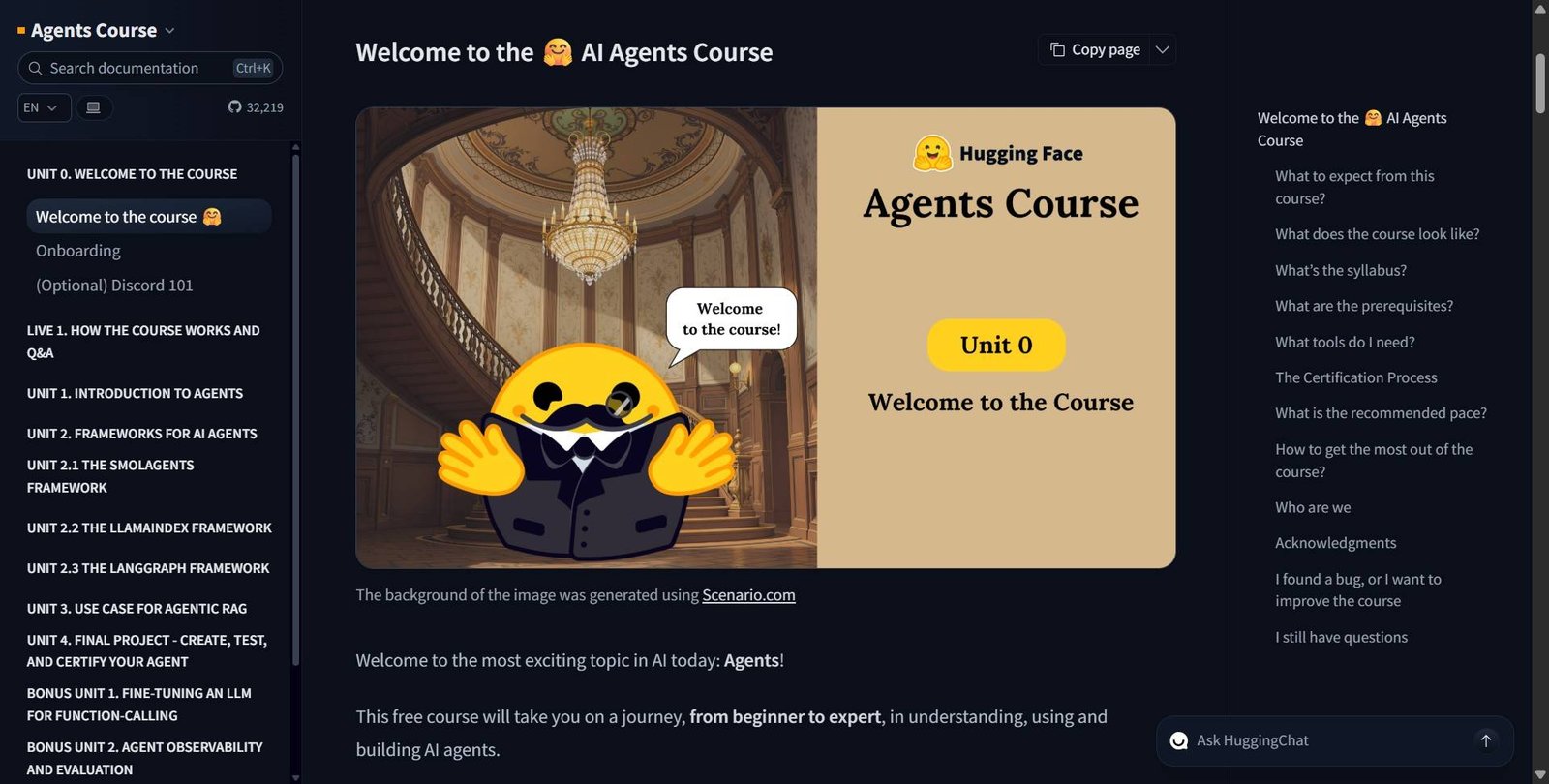
Best for: Students who want to seriously learn agentic AI from the fundamentals.
Level: Beginner → Intermediate
Cost: Free
Credential: Free certification pathway
The curriculum covers how agents work, reasoning and planning, tools and actions, and the Think/Act/Observe workflow. It then moves into practical frameworks including smolagents, LlamaIndex and LangGraph. The course also includes an agentic RAG use case and a final hands-on project.
Why choose it:
- Free certification pathway
- Practical coding
- Multiple frameworks
- RAG and agent concepts
- Strong choice for developers building a portfolio
LINK: Hugging Face AI Agents Course
2. Google 5-Day AI Agents Intensive — Best for Practical Development
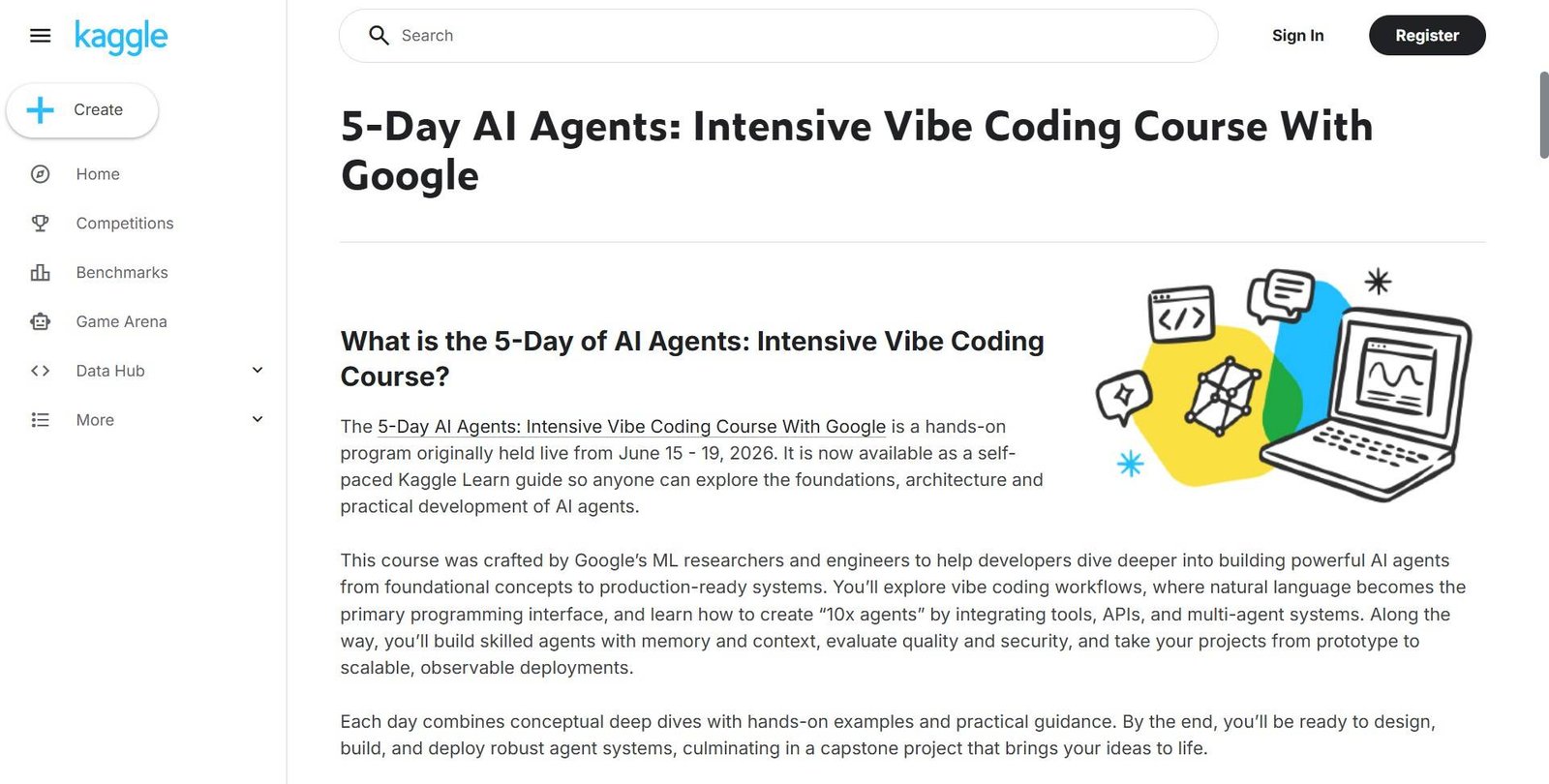
Best for: Learners who want hands-on exposure to modern AI-agent development.
Level: Intermediate
Cost: Free
Credential: Badge and certificate based on participation/capstone
The Google 5-Day AI Agents Intensive was developed with Google researchers and engineers and is now available as a self-paced Kaggle learning guide. It covers agent architecture, tools, APIs, memory, multi-agent systems, evaluation and deployment.
LINK: Google/Kaggle 5-Day AI Agents Intensive
3. Analytics Vidhya AI Agents Learning Path — Best Structured Learning Path
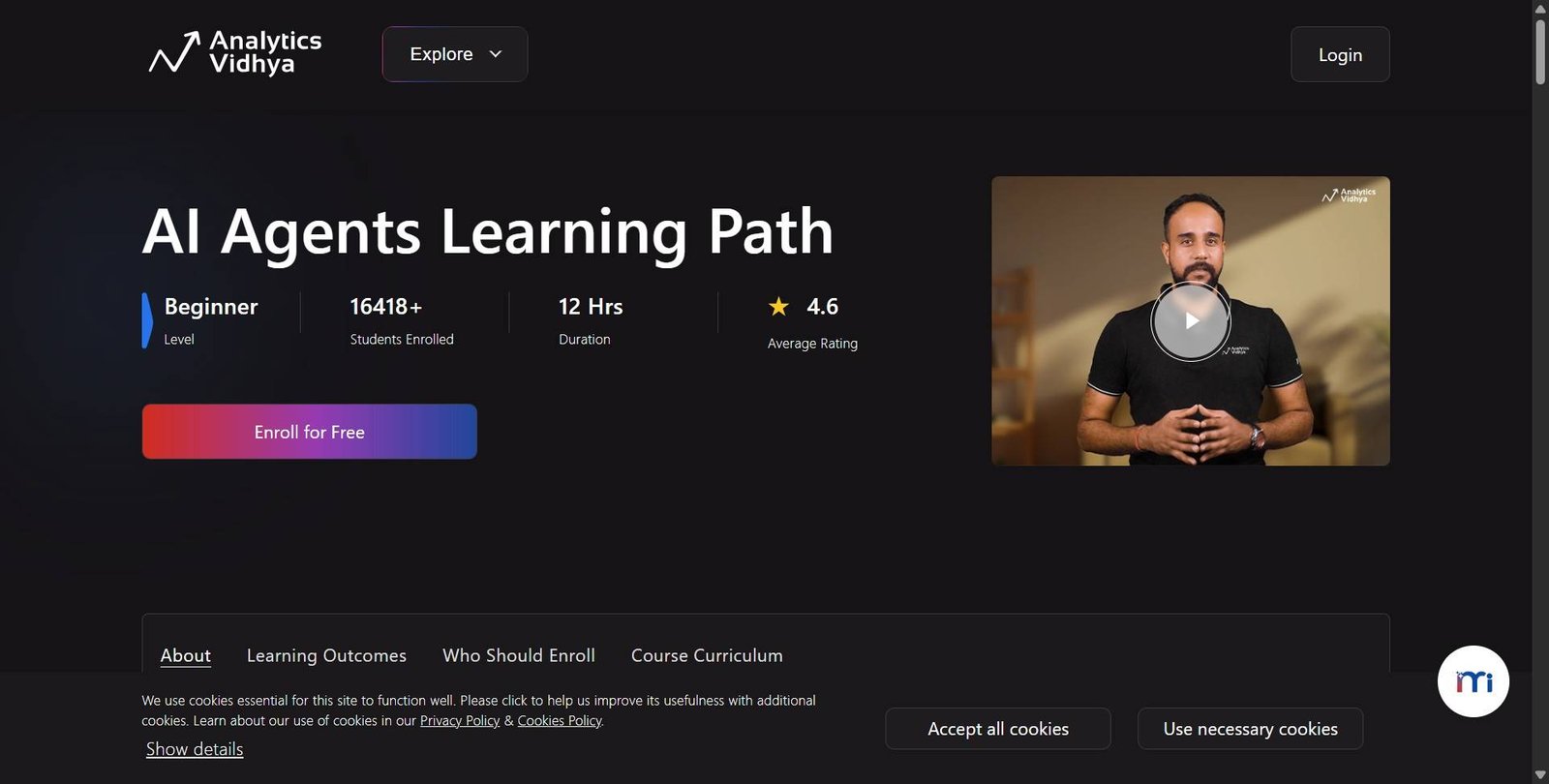
Best for: Beginners who want a structured path toward building practical agents.
Level: Beginner
Duration: About 12 hours
Cost: Free enrollment
Credential: Certificate
The Analytics Vidhya AI Agents Learning Path covers modern agent development using frameworks such as LangGraph, AutoGen and CrewAI. It also covers prompt engineering, memory, context handling, tool use, API integration, RAG, orchestration and deployment.
The course includes projects such as a Data Analyst Agent and Research Copilot, making it more practical than a purely theoretical introduction.
LINK: Analytics Vidhya AI Agents Learning Path
4. Simplilearn AI Agents for Beginners — Best Quick Beginner Course
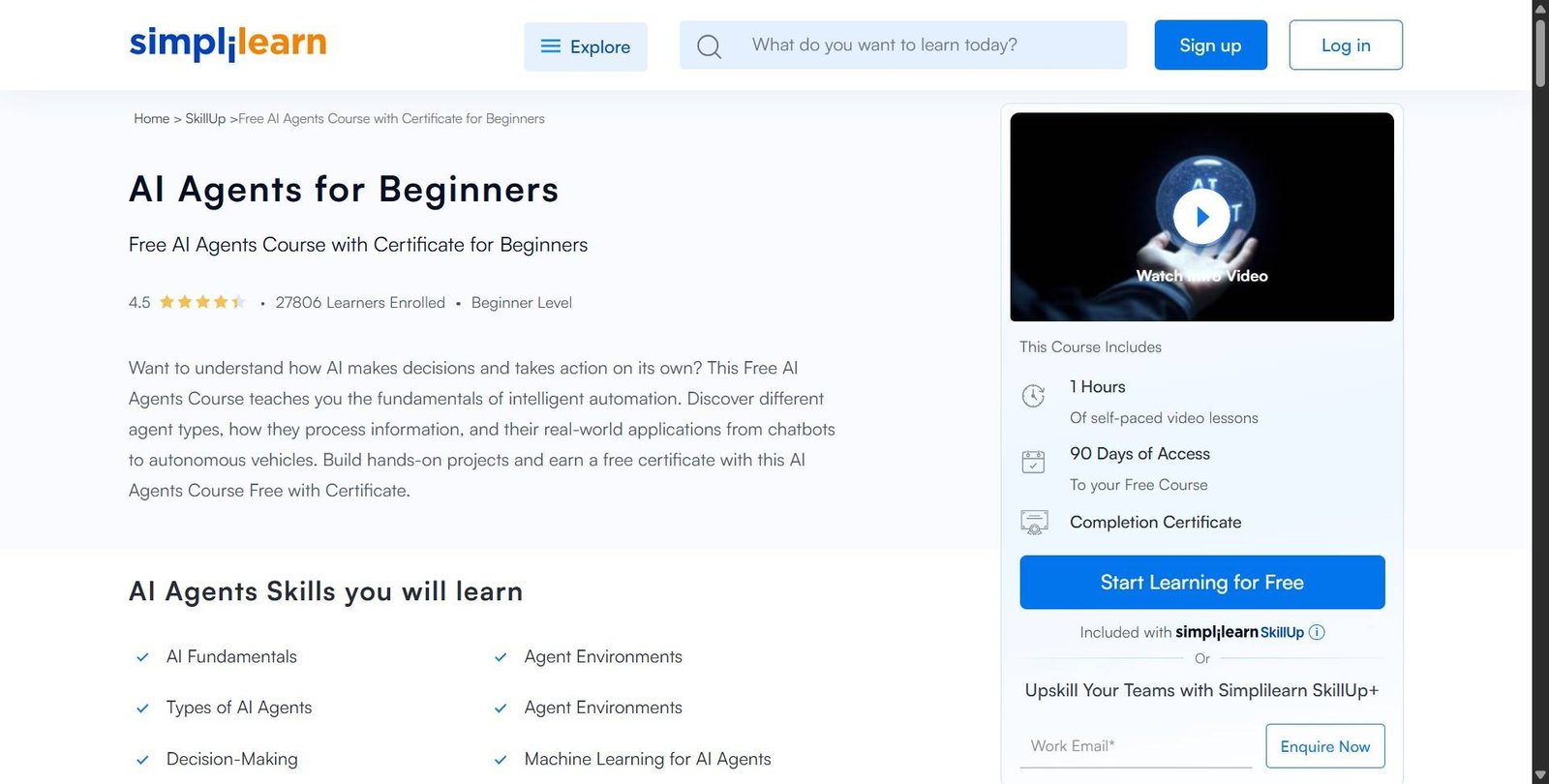
Best for: Complete beginners who want a short introduction.
Level: Beginner
Duration: About 1 hour
Cost: Free
Credential: Free completion certificate
Simplilearn’s course is much shorter than the technical programs above. It introduces AI fundamentals, agent types, environments, decision-making and the role of machine learning in agent behavior. It also introduces building simple AI agents using Python and discusses applications such as voice assistants, autonomous vehicles and robotics.
Limitation: It is an introduction, not a replacement for a serious agent-development curriculum.
LINK: Simplilearn AI Agents for Beginners
5. Understanding Agentic AI — Agent Academy
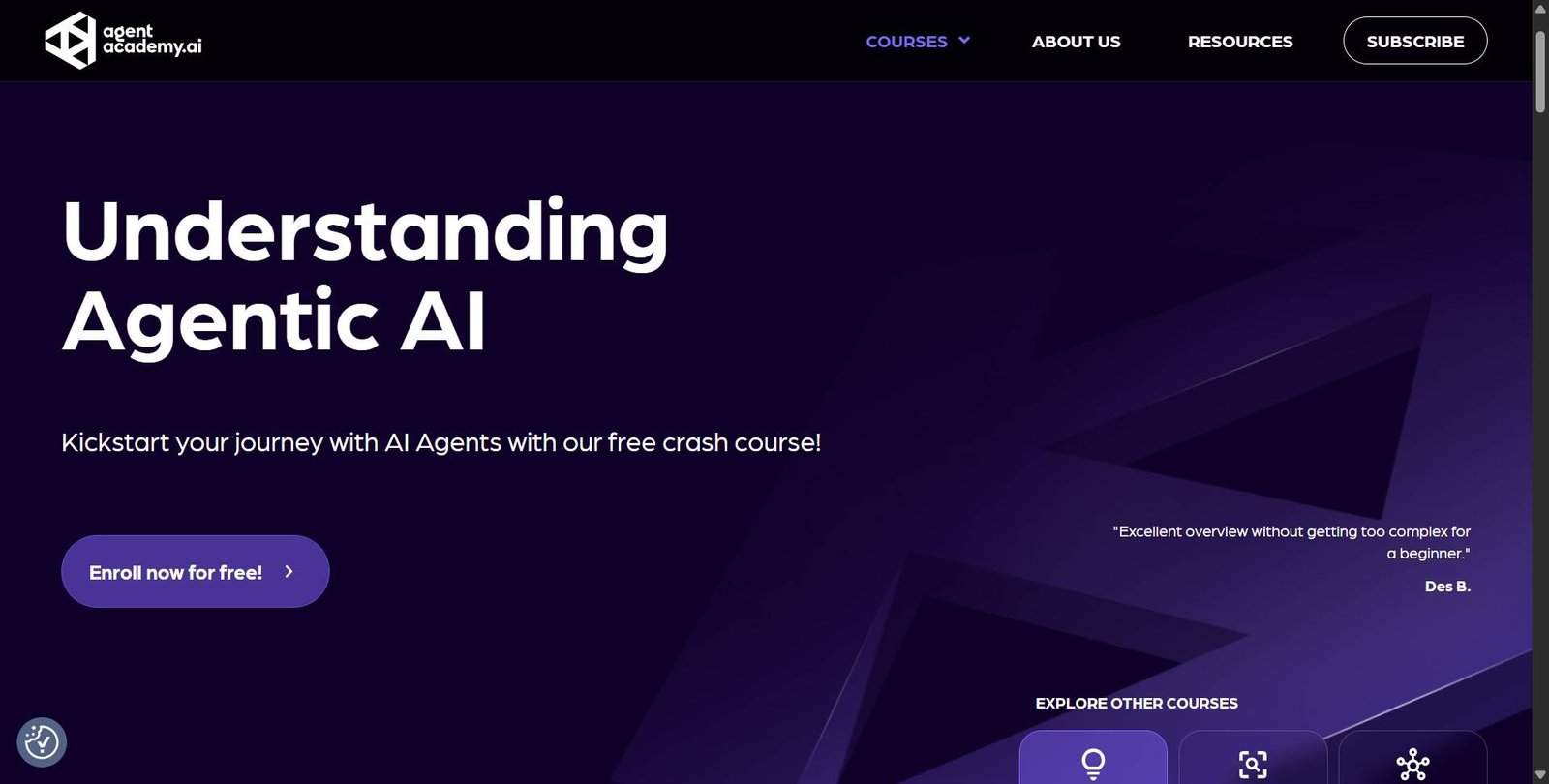
Best for: Beginners who want to understand the fundamentals of agentic AI.
Level: Beginner
Cost: Free
Credential: Certificate of completion
Understanding Agentic AI introduces learners to the fundamentals of agentic AI, including what AI agents are, how they differ from traditional AI systems, how they operate, and how they can be applied to real-world tasks and workflows. The course is designed as a beginner-friendly introduction, making it suitable for students and learners who want to build a foundation in AI agents before moving on to more technical or advanced courses.
LINK: Agent Academy — Understanding Agentic AI
—Advertisement—
6. Develop AI Agents on Azure — Microsoft Learn
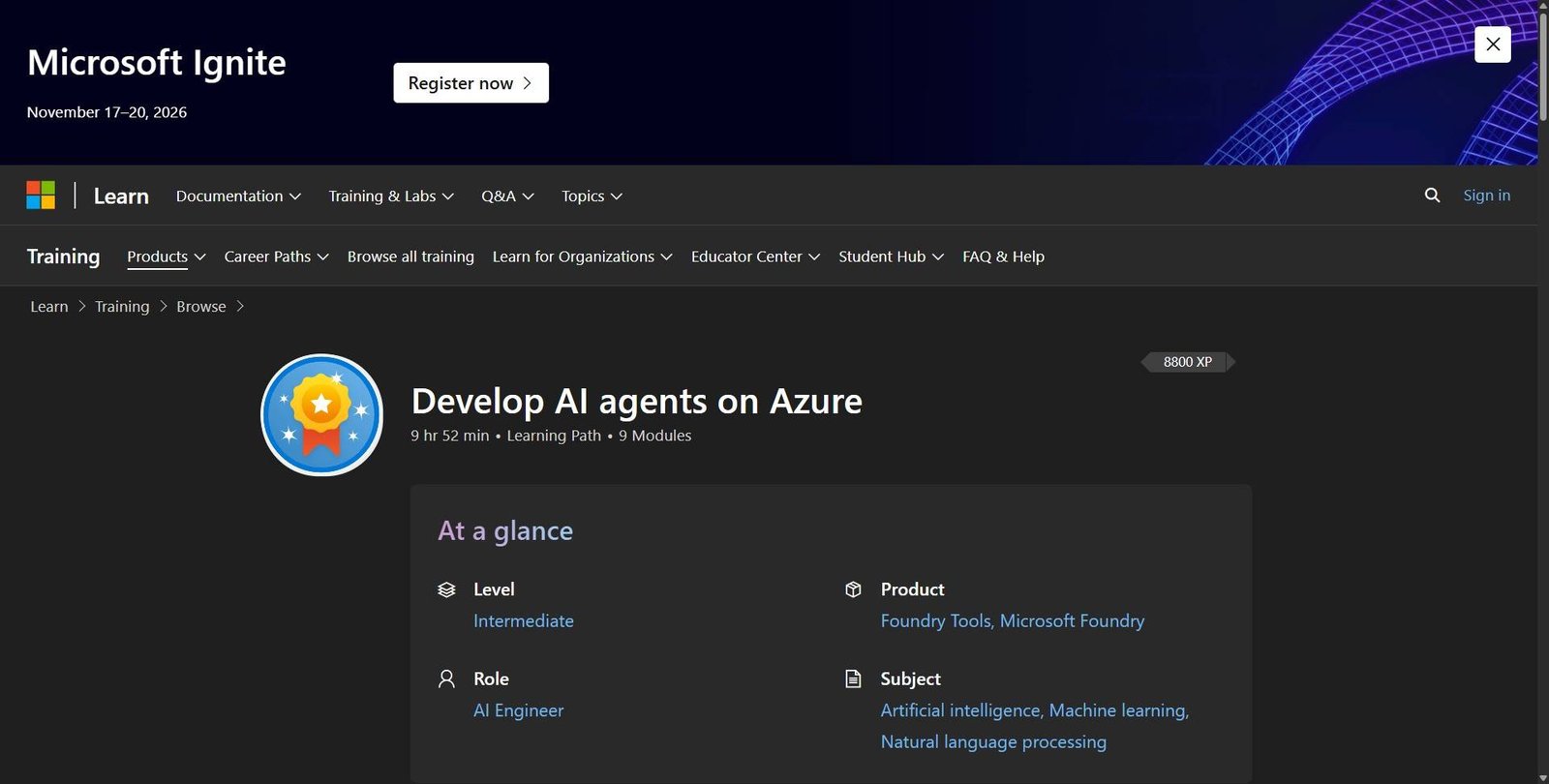
Best for: Learners who want hands-on experience building AI agents with Microsoft Azure.
Level: Intermediate
Cost: Free
Credential: Microsoft Learn achievement/profile record — no traditional course certificate
Develop AI Agents on Azure is a comprehensive Microsoft Learn path covering how to build and deploy AI agents using Microsoft Foundry Agent Service and Microsoft Agent Framework. The path includes nine modules covering custom tools, MCP tools, RAG and knowledge-enhanced agents, Microsoft 365 integration, agent-driven workflows, multi-agent systems and A2A communication.
LINK: Microsoft Learn — Develop AI Agents on Azure
7. Multi AI Agent Systems with crewAI — DeepLearning.AI
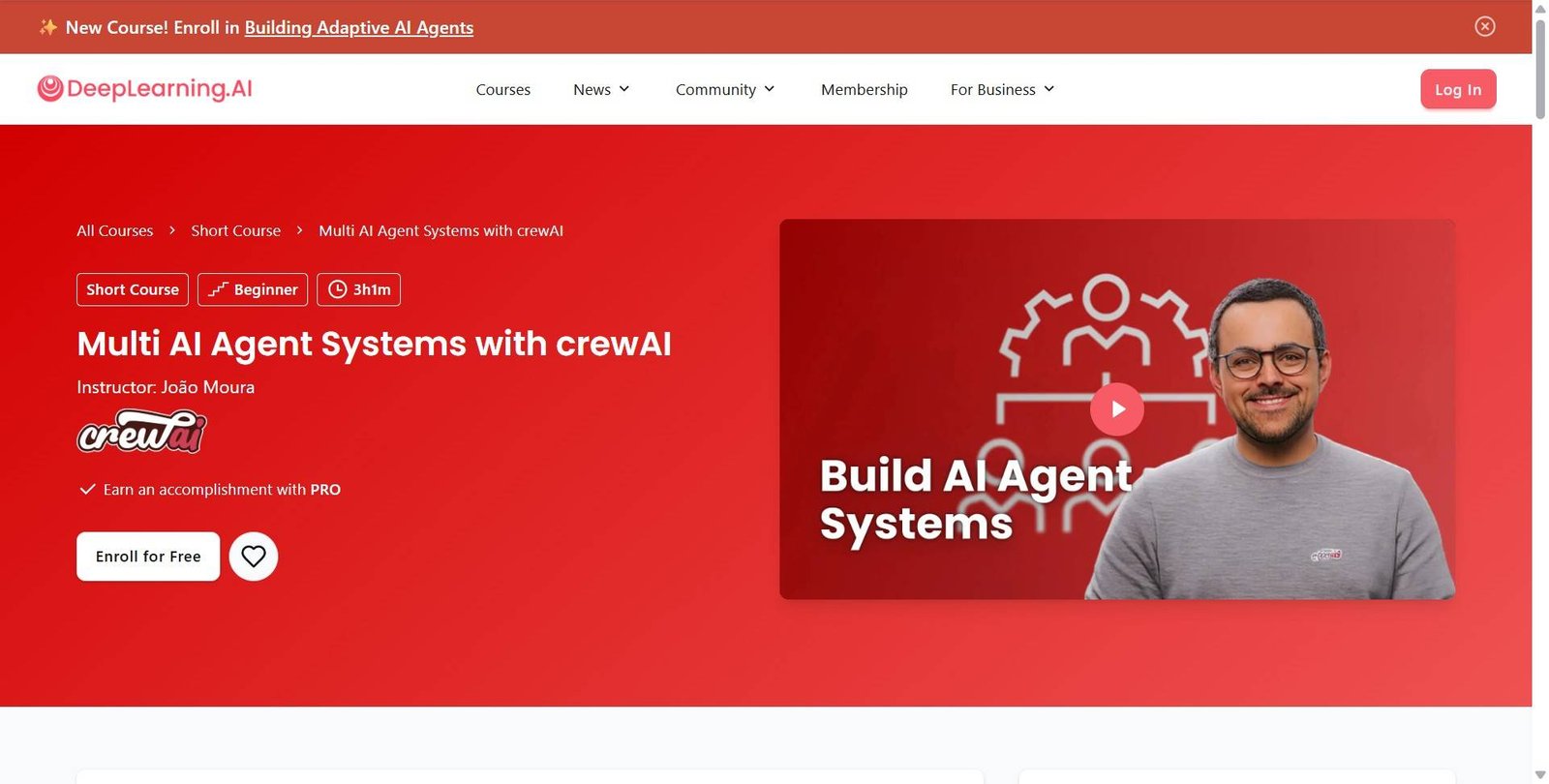
Best for: Learners who want to understand and build multi-agent systems with CrewAI.
Level: Beginner
Cost: Free during the DeepLearning.AI platform beta
Credential: Accomplishment with PRO
Multi AI Agent Systems with crewAI teaches learners how to design teams of AI agents that collaborate on complex, multi-step tasks. The course covers agent roles, memory, tools, task decomposition, guardrails and cooperation, with hands-on examples using the open-source CrewAI framework.
LINK: DeepLearning.AI — Multi AI Agent Systems with crewAI
8. LangChain Academy: Introduction to LangGraph
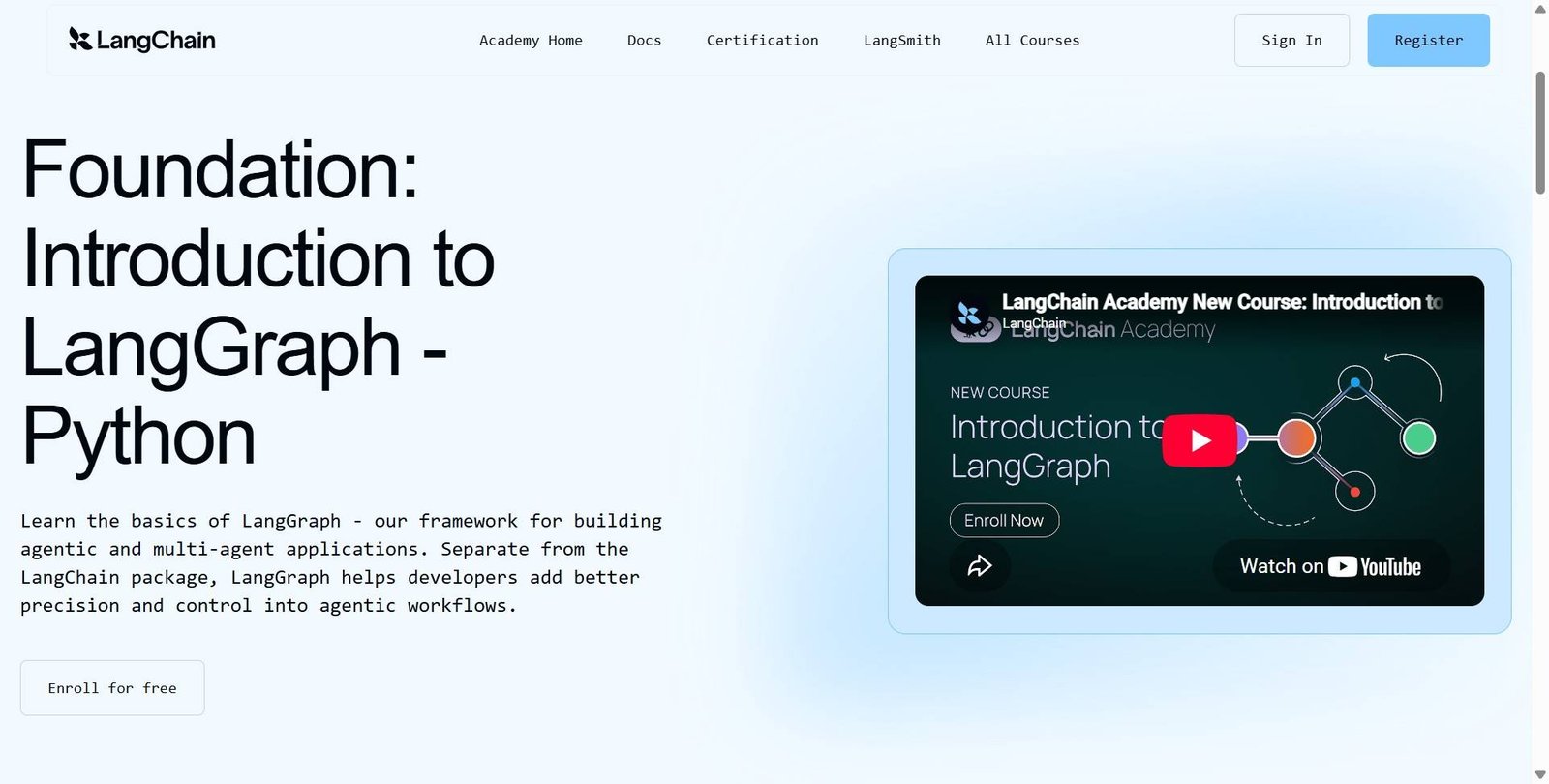
Best for: Developers who want to learn LangGraph.
Level: Intermediate
Duration: About 6 hours of video content
Cost: Free
Credential: Certificate of completion
LangGraph is increasingly important for developers building structured, stateful and multi-step agent workflows. LangChain Academy’s introductory LangGraph course is free and contains 55 lessons covering state, memory, human-in-the-loop workflows, subgraphs, parallelization, research assistants and deployment.
LINK: LangChain Academy — Introduction to LangGraph
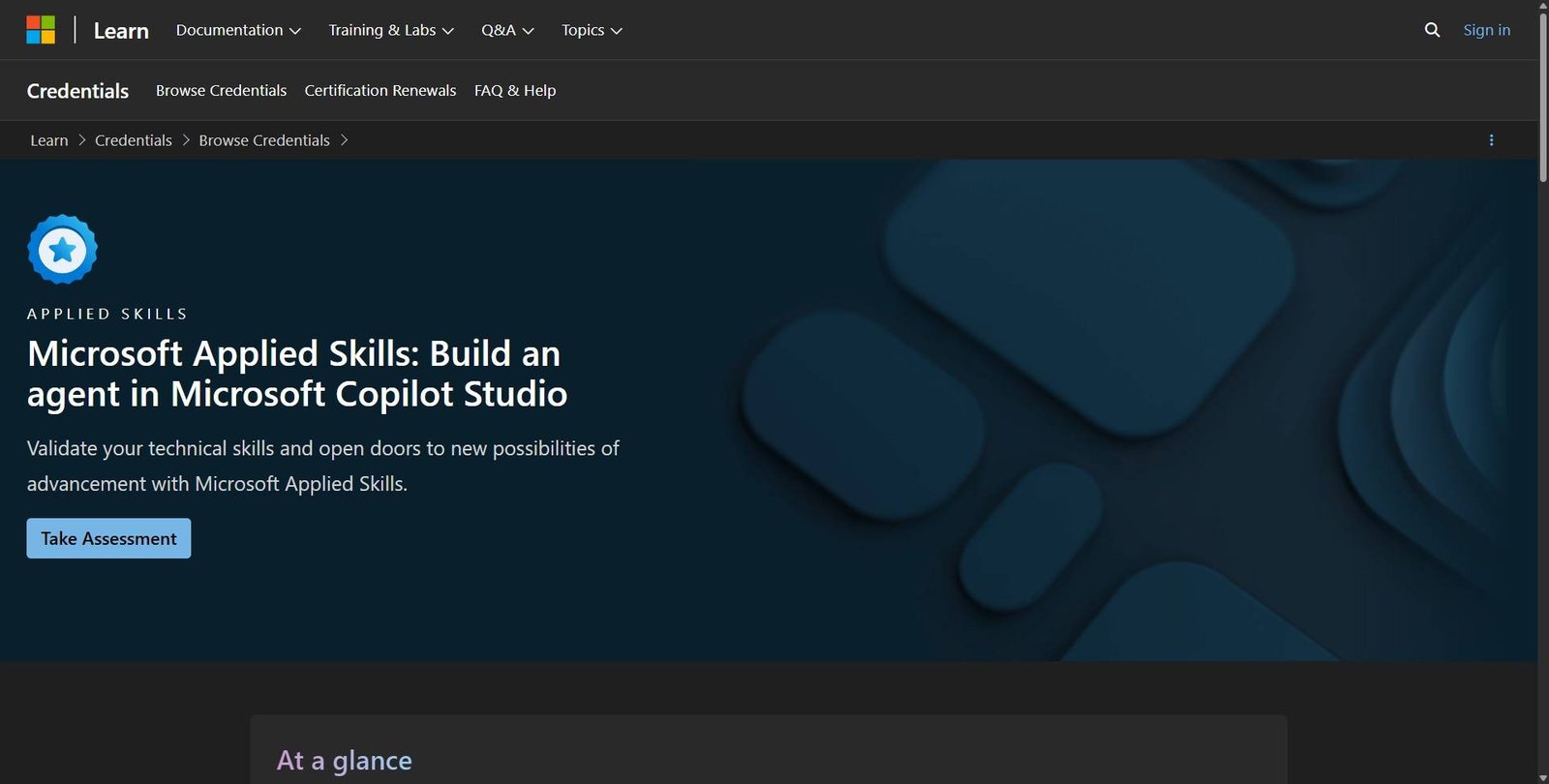
9. Microsoft Applied Skills: Build an Agent in Copilot Studio
Best for: Learners interested in Microsoft’s enterprise AI ecosystem.
Level: Intermediate
Learning path: About 3 hours 42 minutes
Credential: Microsoft Applied Skills credential
Microsoft’s program focuses on building agents with Copilot Studio. The associated learning path covers creating an agent, designing conversations, building intelligent agents and adding structured automation. The assessment evaluates practical skills such as configuring generative AI, adding tools, creating an agent and publishing it.
LINK: Microsoft Applied Skills — Build an Agent in Copilot Studio
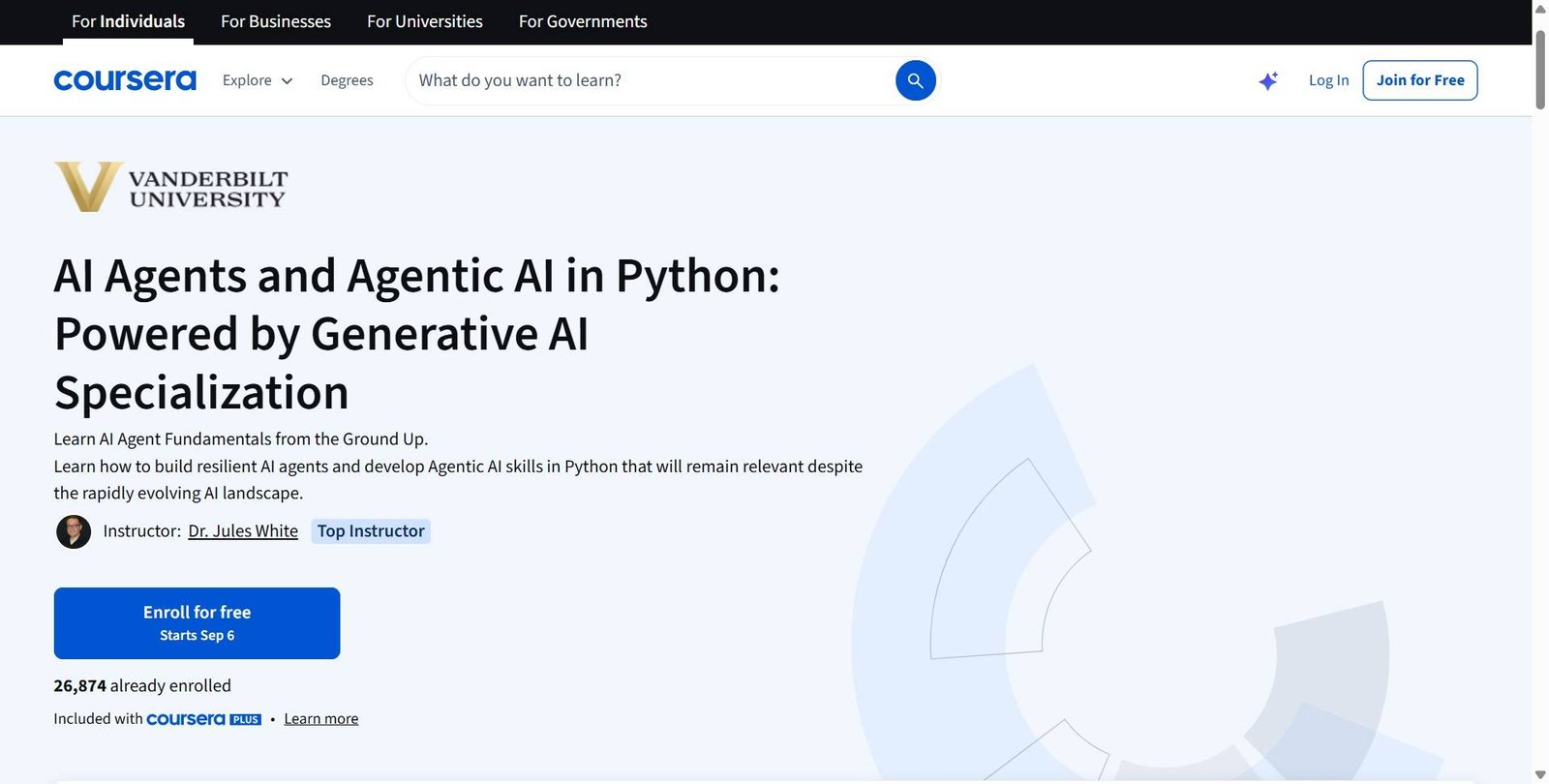
10. AI Agents and Agentic AI in Python — Vanderbilt University
Best for: Learners who want a structured, Python-focused path to building AI agents from the ground up.
Level: Beginner
Cost: Paid — financial aid available
Credential: Vanderbilt University career certificate
The AI Agents and Agentic AI in Python Specialization from Vanderbilt University teaches learners how to build autonomous AI agents in Python, integrate tools and APIs, work with multi-agent systems, and design resilient agent architectures.
The specialization requires basic Python programming knowledge and includes hands-on projects covering agent loops, tool calling, multi-agent collaboration, memory, safety and real-world AI-agent workflows. Learners who complete it can earn a shareable Vanderbilt University career certificate..
LINK: Coursera — AI Agents and Agentic AI in Python
—Advertisement—
A Better Learning Path for AI Agents in 2026 – Free AI Agent Courses
You do not need to complete all 10 courses. A more efficient route is:
Step 1 — Understand the fundamentals
Take: Simplilearn AI Agents for Beginners
Learn:
- What agents are
- Agent types
- Environments
- Decision-making
- Basic AI concepts
Step 2 — Learn modern agent architecture
Move to: Hugging Face AI Agents Course
Learn:
- LLMs as agent brains
- Tools
- Actions
- Reasoning and planning
- Agent loops
- smolagents
- LlamaIndex
- LangGraph
- Agentic RAG
Step 3 — Build practical projects
Take: Analytics Vidhya AI Agents Learning Path
Work on real agent projects and understand orchestration, memory, RAG and deployment.
Step 4 — Specialize
Choose one:
LangGraph → for structured agent workflows
RAG + LangChain → for knowledge-based agents
Google ADK → for Google’s agent ecosystem
Microsoft Copilot Studio → for enterprise/no-code agents
What Is an AI Agent?
An AI agent is a software system that can use an AI model to interpret a goal, decide what actions are needed, use tools and respond to the environment.
A traditional chatbot might work like this: Question → AI → Answer
An agent can operate more like:
Goal → Reason → Choose tool → Perform action → Observe result → Continue → Final answer
For example, a research agent could:
- Receive a research question.
- Search multiple sources.
- Extract relevant information.
- Compare the information.
- Identify missing evidence.
- Perform additional searches.
- Produce a structured report.
That combination of reasoning, tools, memory and action is what makes agentic systems different from ordinary chatbots.
Are Free AI Agent Courses Worth It?
Yes—but the certificate should not be the main reason you take the course.
A certificate can demonstrate that you completed a learning program, but employers and clients generally care much more about whether you can actually build useful systems.
For an AI-agent portfolio, a better combination is:
Course + certificate + GitHub project + working demo
For example, after completing a course, build:
- Research Agent
- PDF Question-Answering Agent
- AI Study Assistant
- Web Research Agent
- Multi-Agent Content Research System
- Customer Support Agent
- AI Data Analysis Agent
A working project gives your course certificate considerably more practical value.
Frequently Asked Questions
For most learners, the Hugging Face AI Agents Course is the strongest overall starting point because it combines fundamentals, practical development, multiple frameworks and a free certification pathway.
Simplilearn’s AI Agents for Beginners is one of the easiest starting points because it takes about an hour and covers the fundamental concepts before moving into more technical material.
Yes. Several platforms currently provide free AI-agent learning resources, including Hugging Face, Kaggle, Analytics Vidhya, IBM SkillsBuild and LangChain Academy.
Hugging Face, Analytics Vidhya and Simplilearn currently provide certificate options. Google/Kaggle and several enterprise platforms use certificates, badges or digital credentials depending on the program.
Not necessarily for introductory courses. However, Python becomes highly useful when you move from understanding agents to actually building them with frameworks such as LangGraph, LangChain, CrewAI or other agent-development tools.
No. ChatGPT is an AI application, while an AI agent is a system designed to perform tasks using capabilities such as reasoning, tool use, memory and external actions. A chatbot can answer a question without taking actions; an agent can potentially perform a sequence of actions toward a goal.
They can demonstrate learning and initiative, but they are not substitutes for technical ability. A certificate combined with a working project, GitHub repository and demonstrable agent is considerably stronger than a certificate alone.
Leave a Comment